Build your quantum program
The development of an organization's quantum initiatives will be influenced by a variety of factors, including research goals, and human and fiscal resources. Early-stage development often consists of steps that include: 1) establish a vision, mission and focus area, 2) you onboard your own team, 3) enable that team (to build in that focus area), and then 4) evaluate the focus area and your team's progress and iterate the process of narrowing or shifting focus and the corresponding team enablement. Let's explore what some of these steps mean.
- Define mission statement: Define the overarching and high-level vision for program and team activities; create a path towards achieving the shared vision through a clear and prescriptive mission and objectives.
- Define goals and their measures of success: Identify goals that contribute to the mission. Define a process and metrics to assess and determine success of the identified goals. The field of quantum computing changes rapidly. So having big-picture priorities and criteria for success clearly defined can be instrumental when technology or interest changes. Identify what programs, events and resources (either from IBM Quantum® or of your own) will be crucial in advancing your goals.
- Define research and application focus areas: Quantum computing has applications in so many areas. That's part of its appeal. But it also means we have to make tough choices in picking one or two focus areas to have a deep impact. Align team capabilities, resources, drivers, and mission to a focus area that targets near-term quantum advantage. Define a process for evaluation and iterative development on project focus areas based on discoveries.
- Build an interdisciplinary team: Build a team on which many different backgrounds and fields of expertise are represented. Partners commonly identify backgrounds in physics, programming, business, project management, and marketing as being critical. Define how the team will work together in pursuit of team goals through assignment of roles and responsibilities.
- Onboard and enable the team: Guide and coach individuals based on their unique background and quantum computing goals. Direct team members to the IBM Quantum Learning platform for courses, tutorials, and documentation, and also be sure to take advantage of any IBM Quantum live events to which you have access. These resources will help your team fast-track and simplify their quantum computing learning journey.
The following sections will add detail to the guidelines 1-3 above. Items 4-5 will be addressed in the next lesson.
Establish a vision and mission
The field of quantum computing is developing rapidly. This makes it important to have guiding priorities and clear criteria for success.
We recommend you start by defining your organization's quantum computing vision and mission to guide and direct your organization to success. A vision defines an aspirational long-term goal and future state. A mission charts the path towards achieving a vision by defining the current near-term purpose, objectives, and required actions.
The vision and mission collectively serve as your team's lighthouse, guiding your team to achieve near-term and long-term success based on your organization's values, priorities, and strategy.
Identify goals
Once you have determined your organization's quantum vision and mission, define goals that ladder up to your organization's vision and mission. Goals exist across many dimensions. Four dimensions in particular have proved useful to many partners in helping them define the high-level priorities of their teams. We recommend prioritizing at most two dimensions to facilitate success.
- Business Impact
- Education & Talent Development
- External Eminence
- Scientific Advancement
Afterwards, re-visit your quantum mission statement to ensure the identified objectives and dimensions promote your mission statement.
Next, align your goals with the tools available through IBM Quantum to help your organization achieve your goals. Map each goal to a benefit to identify advancers of the goal. If you are a partner in the IBM Quantum Network, work with your dedicated IBM Quantum team to identify the benefits that serve your goals the best.
Once all drivers (mission, objectives, and values) have been identified, work to create a viable action plan to drive accountability, transparency, and motivation across your organization based on the current state of your capabilities and resources.
Examples
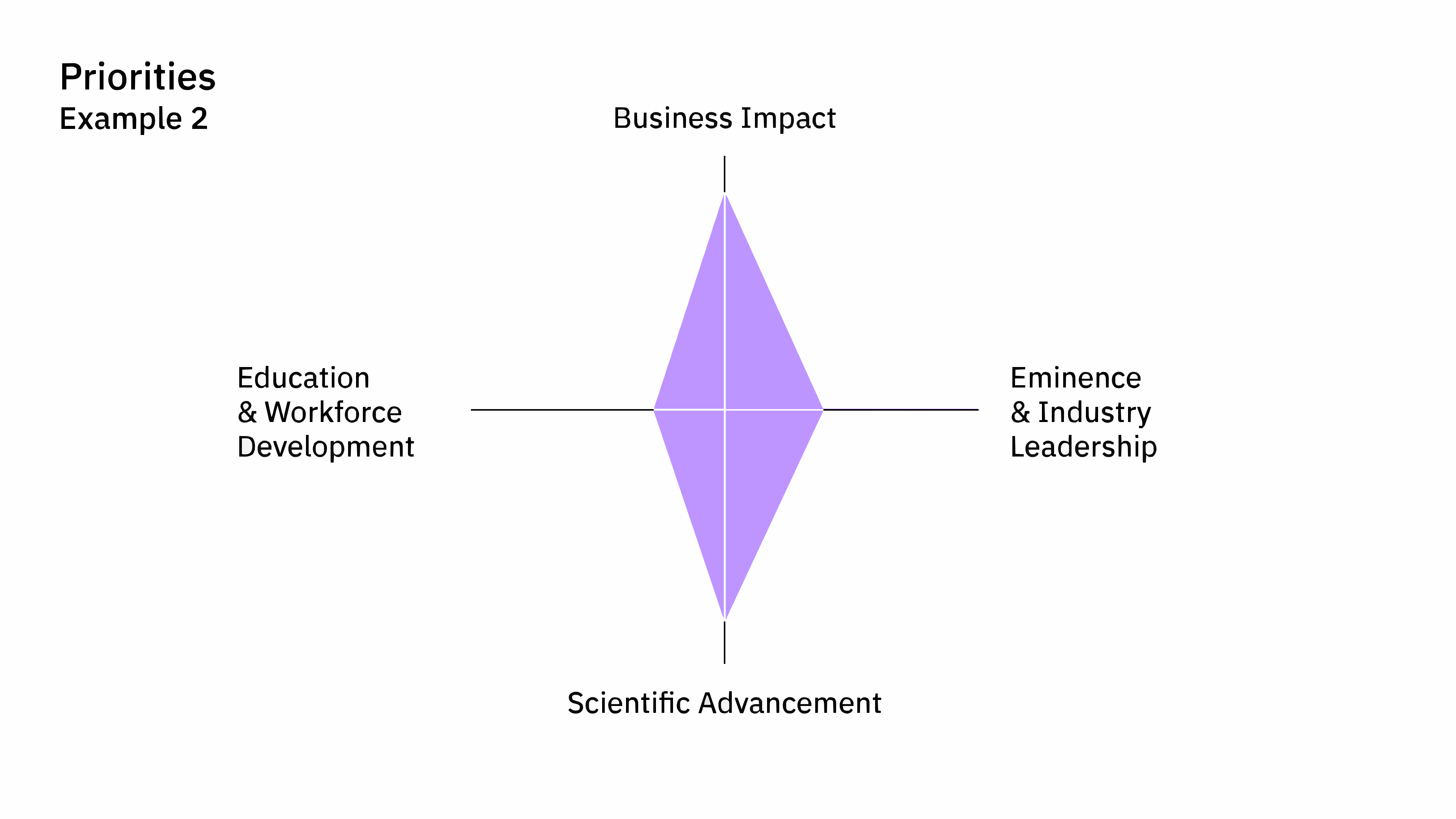
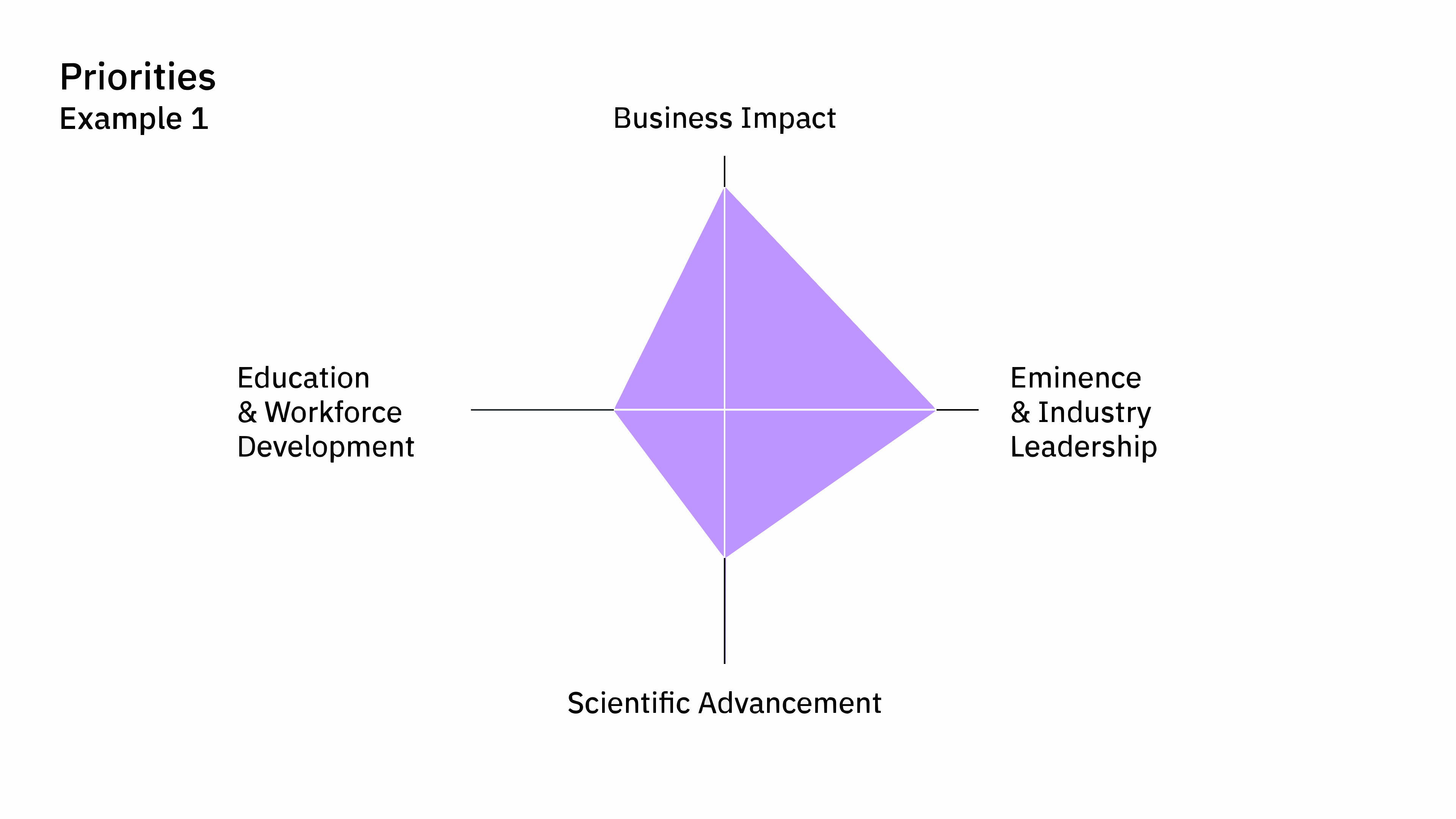
The example value maps below are informed by real cases from the IBM Quantum Network, though they are not taken from any single partner's workshop. Most organizations assign some non-zero value to all four dimensions, as they are clearly interconnected. For example, one cannot have a large business impact using quantum computing if there is not a quantum-smart workforce from which to hire. But an enterprise may still choose to prioritize business impact, while academic institutions may choose to prioritize workforce training and education.
The first image corresponds to an organization that is focused on having a business impact through the development of new quantum-based technology, such as algorithm development or optimization methods for using quantum hardware.
This second value map is a composite of institutions focused on eminence and business impact. Success for such an institution might include speaking at an IBM Quantum event and one regional quantum event, to build eminence. With business impact in mind, success for this institution could be identifying use cases regarding current business problems and delivering a proof of concept based on one of the identified use cases.
Priorities
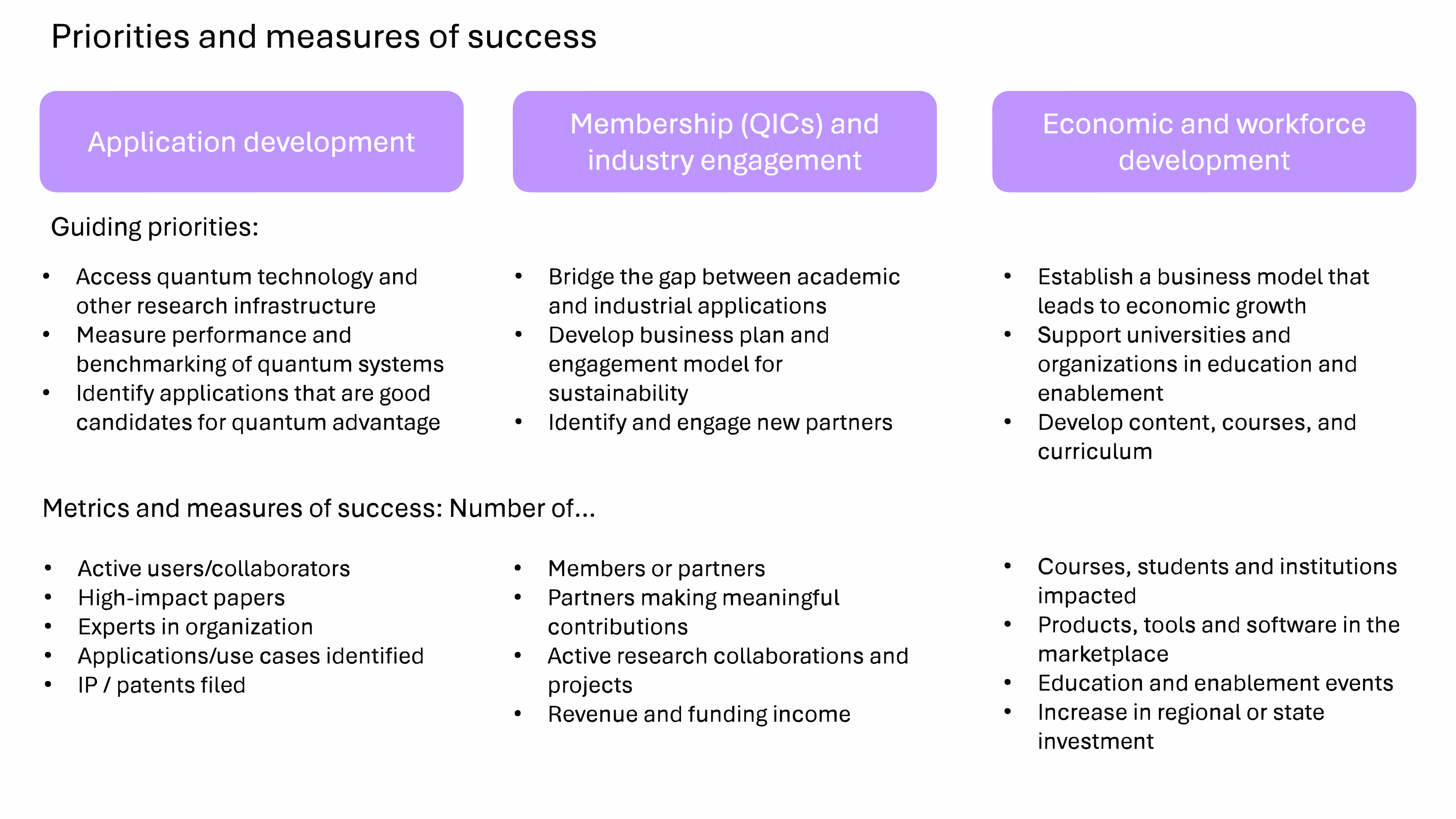
Once concrete goals are in place, it is time to prioritize them, and to decide what success looks like. Each theme of guiding priorities is paired with potential metrics and measures of success. Some wording may be more appropriate for one partner type or another (such as a QIC having "members").
Key points
- Keep things simple - focus on problems most interesting/useful to customers or closely related to your core competencies.
- Leverage state of the art methods in quantum computing, while also exploring new avenues for growth with the technology.
- Actively talk to a wide range of customers/stakeholders and quantum ecosystem members.
- Stay up to date on news regarding hardware and software developers, as well as universities and national labs.
- Implement iterative development (agile methodology) for priorities, values, and focus areas.
Metrics of success
Because quantum computing is such a rapidly-changing field, it is critical to choose metrics of success that can adjust to a moving target, but which will also correspond to some reliable deliverable.
Key points
This is a short list of common metrics used by leaders of successful quantum initiatives.
- Number of team members upskilled to the level of quantum expertise (building skills to experiment in quantum computing)
- Number of research papers (advancing science and technology)
- Number of students and workforce members trained
- Number of patents or potentially patentable assets (IP and algorithm portfolio)
- Number of business use cases you can deliver quantum-ready
- Number of quantum-aware employees in the client organization (such as through light training like Quantum Business Foundations)
- Number of events organized and executed
- Number of active users on IBM Quantum Platform
- Number of speaking events (internal/external)
Research or application focus
This lesson has been primarily about focusing your quantum initiative. Let us think about what that means in the context of research. One reason that quantum is so appealing is its potential to fundamentally alter an amazing breadth of fields and industries. But that breadth of possibility can also hinder success, if a quantum team does not focus on one area (or a few well-defined areas). It is therefore critical to pick an area of research and application, early on.
How do you define a research focus? This will have obvious interplay with the make-up of your team and their expertise, as well as with the core goals of your organization, such as focusing on fundamental research versus industry applications. The following steps helped prior partners define a research focus.
Key points
- Start with your comfort zone(s) and branch out.
- Being an IBM Quantum Network partner positions you to note and leverage similarities between challenges in different fields and economic sectors.
- Listen to your stakeholders.
- Prioritize based on potential impact.
In addition to the steps above, there are considerations unique to organizations working with clients, such as the following:
- Start outreach to potential clients/partners early: Member agreements for QICs can take a long time to work out. Other client engagements may be similar. Having several strong candidates lined up prior to starting system access can help the launch of a quantum initiative to build momentum.
- Refine member/client engagement models: What works for a member or client at one stage won't work in all stages. You may need to revisit your engagement model, and revise things like frequency or modality of meetings.
In the next lesson we will discuss assembling a team, including key roles and responsibilities.